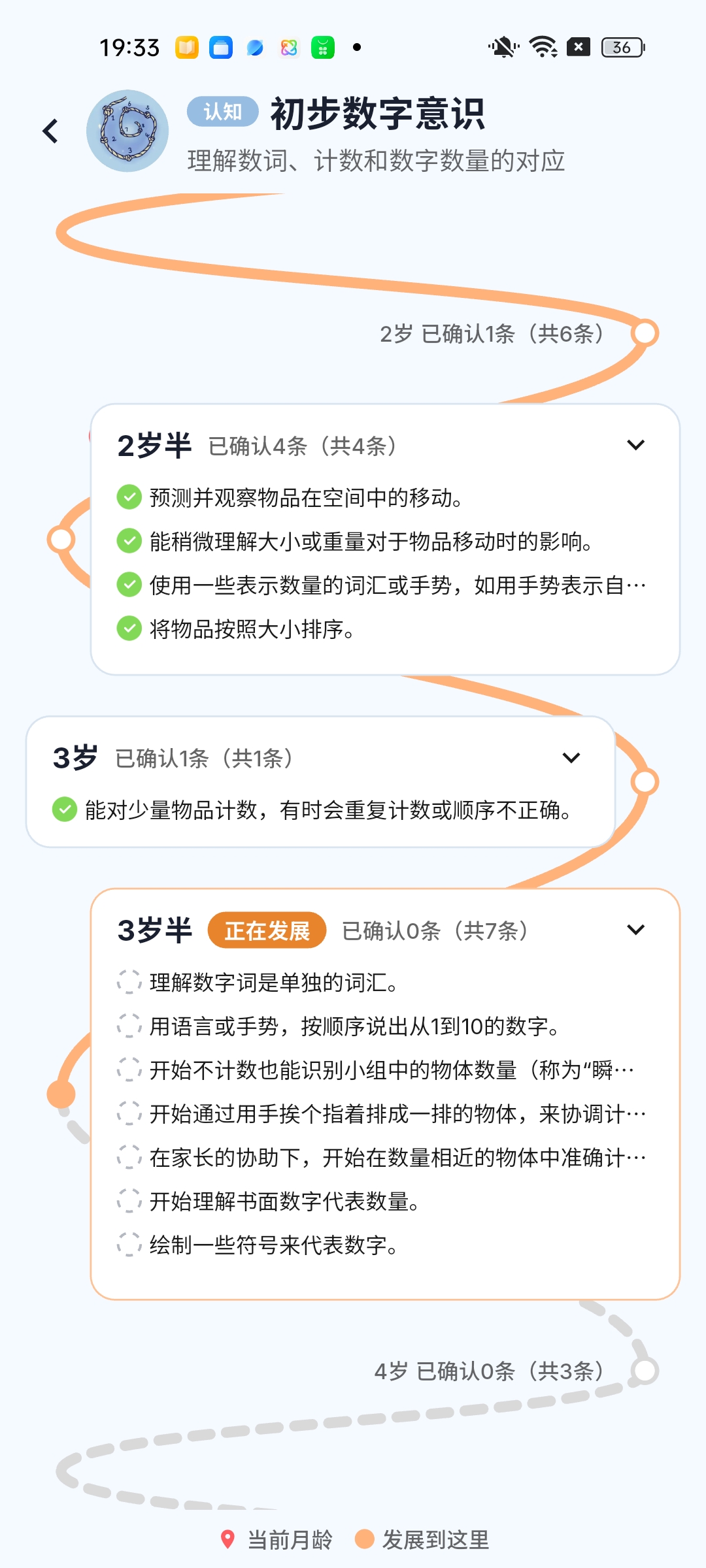
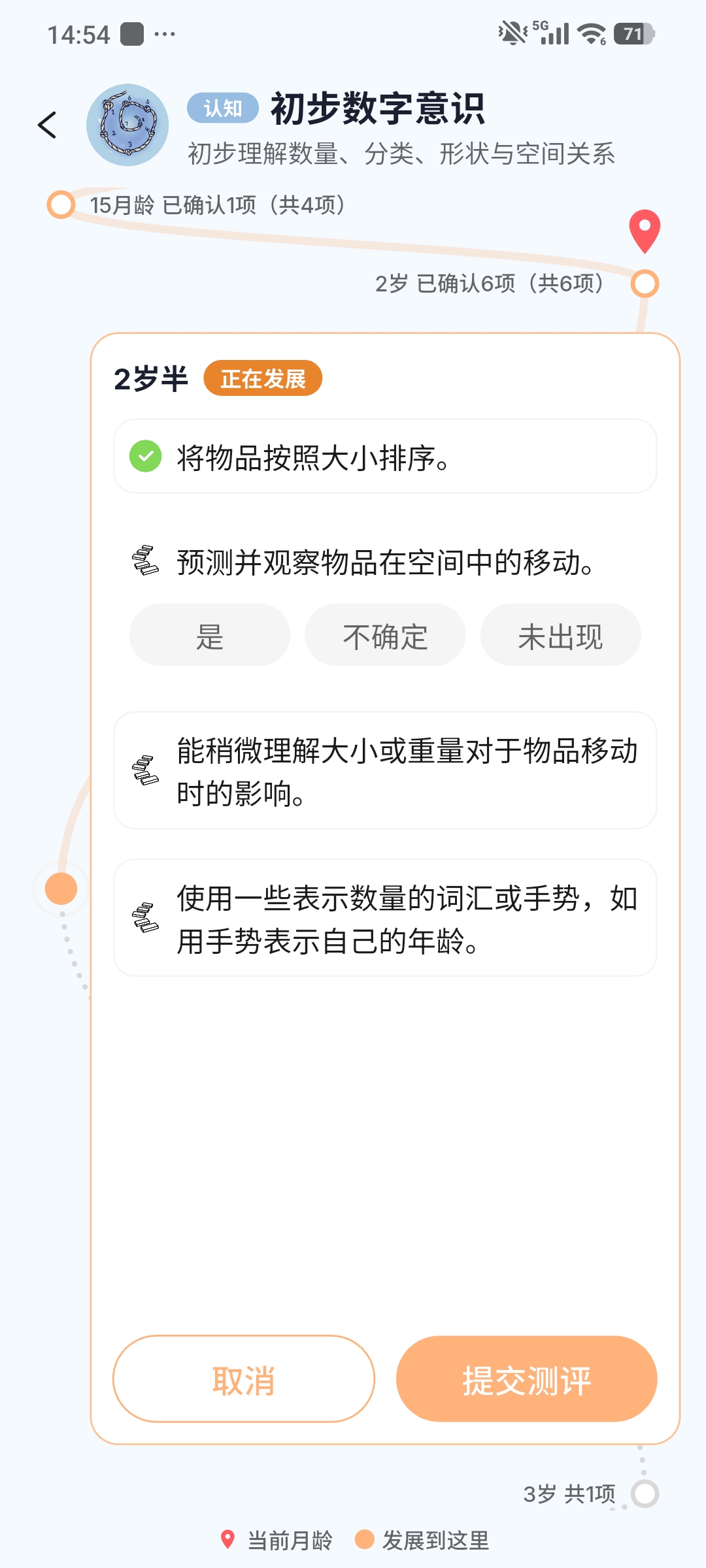
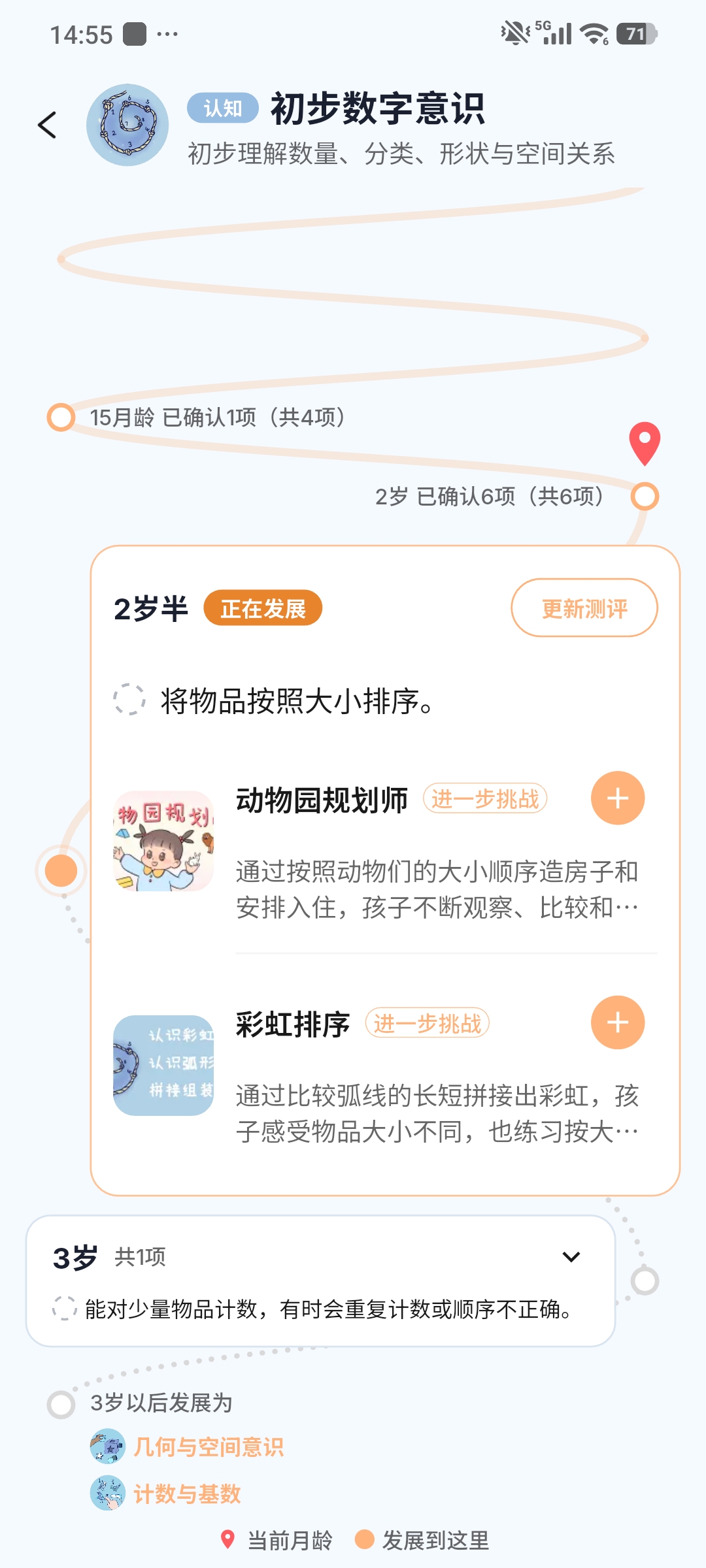
- Choose a direction on the Growth Map: Find the specific ability you actually want to understand or support among 31 sub-domains.
- See the current position, evidence, and strengths: Use behaviors you have already observed to understand the current stage of this Growth Path.
- Turn the next step into a doable activity: Find a recommended next skill, then choose a way to play that fits your family.
“I want to support language or math” is still a broad starting point
Language includes more than vocabulary. It also includes attending and understanding, communicating and speaking, comprehension, and foundations for literacy. Mathematics is more than reciting numbers: it includes quantity, counting, space, classification, measurement, and reasoning.
The same child may be at different stages in different abilities. A popular early-learning activity may be fun, yet still not connect naturally to what your child is developing next.
Better Parenting's four domains and 31 sub-domains help turn “What do I want to support?” into a more specific, useful question.
Find a more relevant next step in three stages
1 | Choose an ability on the Growth Map
You can begin with a direction that matters to your family. There is no need to wait until the system finds a “problem.” You can also keep developing an ability when foundations are secure or your child already shows a strong interest.
2 | Complete a Skill Assessment from everyday behavior
After you open a sub-domain, Better Parenting asks about skills near your child's age and whether you have consistently observed them in daily life.
The age attached to a skill marks its place on a developmental path. It is not a deadline by which every child must complete it. If you are unsure, keep observing during everyday life and activities rather than guessing.
3 | See the current position, next skill, and activities
After the assessment, you can see:
- the current status for this sub-domain;
- why Better Parenting reached that result;
- where your child is along the Growth Path;
- a skill that may be worth supporting or observing next;
- related activities you can try.
One skill can be supported through different kinds of play. Choose according to your child's interests, the materials you have, and the situation that day. No single activity is the only correct answer.
A real example: emergent mathematical thinking at 30 months
Early math at 2½ is not only about reciting numbers. Emergent Mathematical Thinking includes experiences such as recognizing that quantity changes how many objects are needed, using spatial relationships to move and place things, and using attributes to match or sort objects.
You can choose Emergent Mathematical Thinking on the Growth Map, then answer relevant skills using everyday observations. Better Parenting can then identify which experiences are more familiar to your child and what may be worth supporting next—for example, deciding “how many we need” while sharing real objects or sorting things by one useful attribute while putting them away.
Read the complete guide to early math at 30 months
“More personalized” does not mean predicting your child's future or asking them to complete older content early. It means making today's interaction more relevant to where your child is now.
More advanced and earlier are not automatically better
Better Parenting follows several principles:
- development has broad sequences, but it is not a linear race;
- a next step can offer some challenge while leaving room for your child to try;
- one ability can be explored with different materials, settings, and kinds of play;
- initiating, trying, adjusting an approach, and becoming more independent matter more than copying one standard answer;
- the relationship and shared enjoyment of the activity matter too.
Common questions
Can I support several sub-domains at the same time?
Yes, but there is no need to turn all 31 into family assignments. Choose a small number based on your child's interests and your family's goals, or let the Growth Plan organize near-term priorities.
How is a Skill Assessment different from a Milestone Assessment?
Milestones help you check important foundations for the current age. A Skill Assessment gives you a more continuous picture of where one ability is now and what may be useful next.
Should I keep developing an ability that is Ahead for age?
You can offer interesting, appropriately challenging opportunities, but there is no need to race ahead just to preserve the label. Interest, initiative, and flexible use across situations matter more than speed.
Why might the recommended activity differ from a popular early-learning topic?
Better Parenting first looks at your child's current position and recommended next skill within a sub-domain, then finds an activity that can support it. That will not always be the most popular or worksheet-like option.
Begin with one ability you genuinely care about
- Browse on the website: See how one sub-domain generally develops.
- Find your child's next step: Download Better Parenting, choose a sub-domain, and complete a Skill Assessment.