
Child-development knowledge
Which parts of development matter from birth to age 5?
Begin with your child's current age, an ability you care about, or a question from everyday family life. Age is a reference; Growth Paths help explain change.
By age
Begin with important foundations for this age
Explore a four-domain picture, Milestone references, what to notice, and interactions you can try in everyday life.
undefinedAt 2 months, your baby is beginning to take a more active part in the world through their gaze, sounds, and body movements. Start with foundational Mi→undefinedAt 4 months, your baby may be more eager to lift their head, reach toward things, and answer familiar people with sounds. This stage is not only about→undefinedAt 6 months, your baby may reach, shift their body, explore objects, and enjoy familiar backandforth exchanges with greater purpose. Movement, attenti→undefinedAt 9 months, your baby is gaining more ways to move independently, handle objects, and communicate an intention. Whether or not crawling has appeared,→undefinedAt 12 months, your baby is using movement, object play, imitation, and communication for more real purposes. Independent walking is only one part of t→undefinedAt 15 months, many children are moving from cruising toward independent walking and from gestures toward a small set of everyday words. Different abil→undefinedAt 18 months, your child takes part in daily life through walking, handling objects, imitation, and a growing set of words. Variation can be wide at t→undefinedAt 2 years (24 months), your child is beginning to combine movement, words, imagination, and social observation. Rather than only counting words or ac→undefinedAt 2½ years (30 months), your child can connect more life experience across pretend play, negotiation, expression, and problemsolving. An adult's role→undefinedAt 3 years (36 months), your child increasingly uses language, movement, and imagination to do things with other people. Wholechild development at thi→undefinedAt 4 years (48 months), your child can use more complete plans, language, and cooperation to carry out something they enjoy. Development is visible no→undefinedAt 5 years (60 months), your child is preparing for more independent learning and group life. The most useful question is whether they can bring movem→
By ability
Browse 31 sub-domain Growth Paths
Follow how skills change from birth to age 5, understand a child's current position, and find useful interaction priorities.
Movement

Cognitive

Initiative and CuriosityInitiating action, approaching what is new, and asking questions
MemoryRetaining and reusing past experience

Imitation and Symbolic Representation and PlayImitating actions and gradually using objects, pictures, or actions to stand for something else

Exploration and DiscoveryActing on things and continuing to explore from the result
Cognitive Self-Regulation (Executive Functioning)Holding a goal, shifting attention, and managing cognitive interference
CreativityGenerating ideas and bringing them into play and expression

Emergent Mathematical ThinkingExperiencing quantity, space, and object attributes in real life
Reasoning and Problem-SolvingFinding and adjusting ways to pursue a goal or work through difficulty
Geometry and Spatial SenseUnderstanding shapes, positions, directions, and spatial relationships
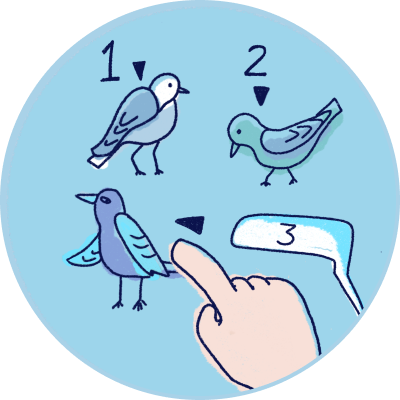
Counting and CardinalityCounting in sequence and understanding that the final number represents the total
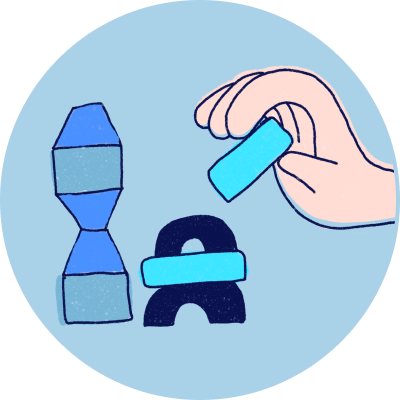
Operations and Algebraic ThinkingUnderstanding adding, taking away, combining, and patterns
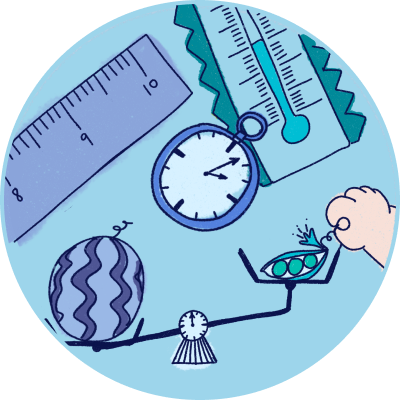
MeasurementComparing, measuring, organizing, and interpreting information

Scientific InquiryAsking, predicting, observing, testing, and explaining discoveries
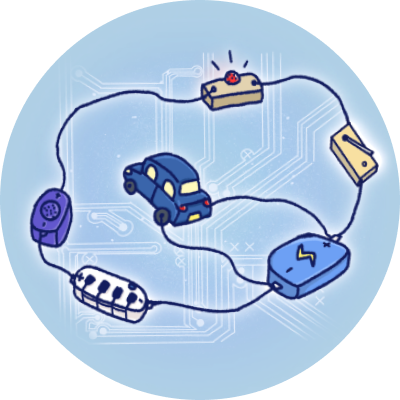
Reasoning and Problem-SolvingUsing relationships, evidence, and strategies for more complex problems
Social/Emotional

Relationships with AdultsBuilding trust through stable, responsive relationships

Emotional FunctioningExperiencing, recognizing, expressing, and understanding emotion

Emotional & Behavioral Self-RegulationRecovering and continuing when emotion interferes

Relationships with Other ChildrenJoining play, taking turns, negotiating, cooperating, and handling conflict

Sense of Identity and BelongingUnderstanding who I am, what I can do, and which relationships and groups I belong to
Language
Attending and UnderstandingUnderstanding sounds, words, directions, and other people's meaning

Communicating and SpeakingInitiating and participating in communication through sounds, gestures, and increasingly complex language

VocabularyUnderstanding and using an increasingly rich and precise range of words

Emergent LiteracyDeveloping interest in books, pictures, print, and writing experiences

Phonological AwarenessAttending to sounds, syllables, and rhyme in words

Print and Alphabet KnowledgeDiscovering that print has stable forms and gradually recognizing letters and words

Comprehension and Text StructureUnderstanding, retelling, and discussing stories and information

WritingGradually using marks, symbols, and print to communicate meaning
By question
Begin with a specific family question
Find the situation, a direct answer, what to notice, and interactions you can try.
Learning to Walk at 12–15 Months: How to Support Each Next StepLearning to walk does not begin from the same place at 12 and 15 months. Around 12 months, many children are moving from crawling toward pulling to stContinue reading →From Gestures to First Words at 15–18 MonthsWhen your child communicates mostly by looking, pointing, pulling your hand, or making sounds, begin by showing that you understand. Put one useful woContinue reading →How to Read With an 18-Month-Old Who Keeps Turning the PagesRepeatedly turning pages or returning to the same picture does not necessarily mean your toddler is “just flipping.” Follow the page they choose and mContinue reading →Toddler Tantrums After Hearing “No”: How to Hold the Limit and HelpWhen your child cries after a reasonable limit, do not rush into a longer explanation or reverse the limit simply to stop the crying. Name what they wContinue reading →How to Read English Picture Books With a 3-Year-OldFor a child beginning English, choose a book with a simple event, repeated language, and pictures that make the meaning visible. You do not need to trContinue reading →How to Introduce English to a 3-Year-OldFor families introducing English as an additional language, you do not need to begin with a large collection of songs, flashcards, and books. Choose tContinue reading →When Two Toddlers Play Separately: How to Help Them ConnectTwo children playing separately does not mean the playdate has failed. Let them become familiar with the space and materials, and wait to see whetherContinue reading →Playdates at 2½–3: Helping Toddlers Practice Playing With PeersPlaydates at 2½ to 3 are not about rehearsing a perfect social script. They give children repeated, lowpressure chances to join, respond, handle smallContinue reading →Sorting at 2½: Help Your Child Find the Feature That MattersSorting at 2½ does not need to mean putting every red object in a red bin. Give the objects a real purpose: animals of different sizes need houses thaContinue reading →Early Math at 2½: Make Quantity, Space, and Sorting UsefulEarly math at 2½ does not need to begin with worksheets or equations. Start with three kinds of relationships that change what your child does: quantiContinue reading →Teach Quantity at 2½ by Making “How Many” MatterTo explore quantity at 2½, let “how many” change the result of a real task. If the order is for two grapes, load them one at a time. Say one count worContinue reading →How to Help a 2½-Year-Old Understand Stories Without QuizzingShared reading at 2½ does not need to begin with a stream of questions or a request to retell the book. Start with one picture and name clearly who isContinue reading →From Counting to “How Many” at Age 4Reciting number words is not the same as matching one count word to each object and understanding that the final number tells how many are in the wholContinue reading →My 9-Month-Old Isn't Crawling Yet. How Can I Encourage Movement?If your baby already looks, reaches, kicks, turns, or pushes toward something they want, you do not need to place them in a “perfect” crawling positioContinue reading →