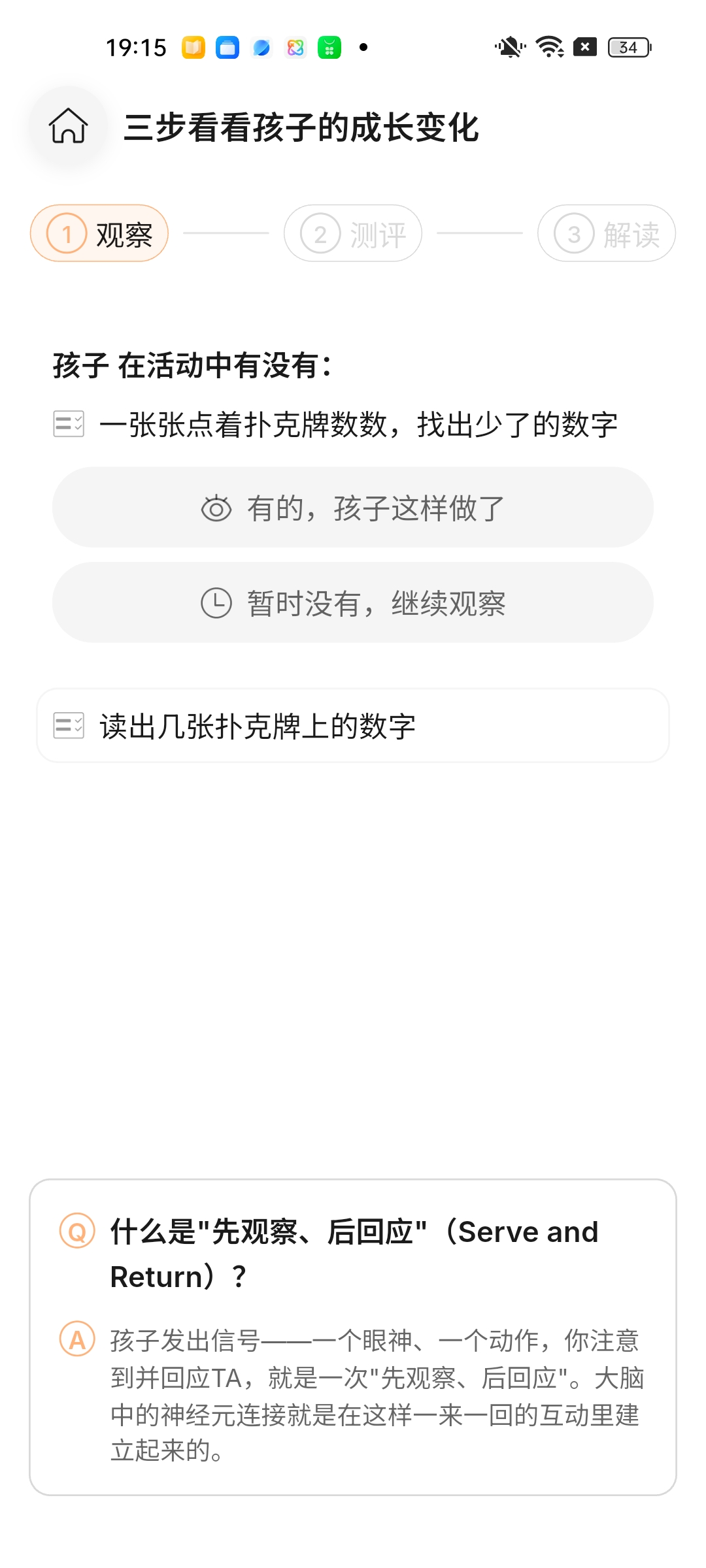
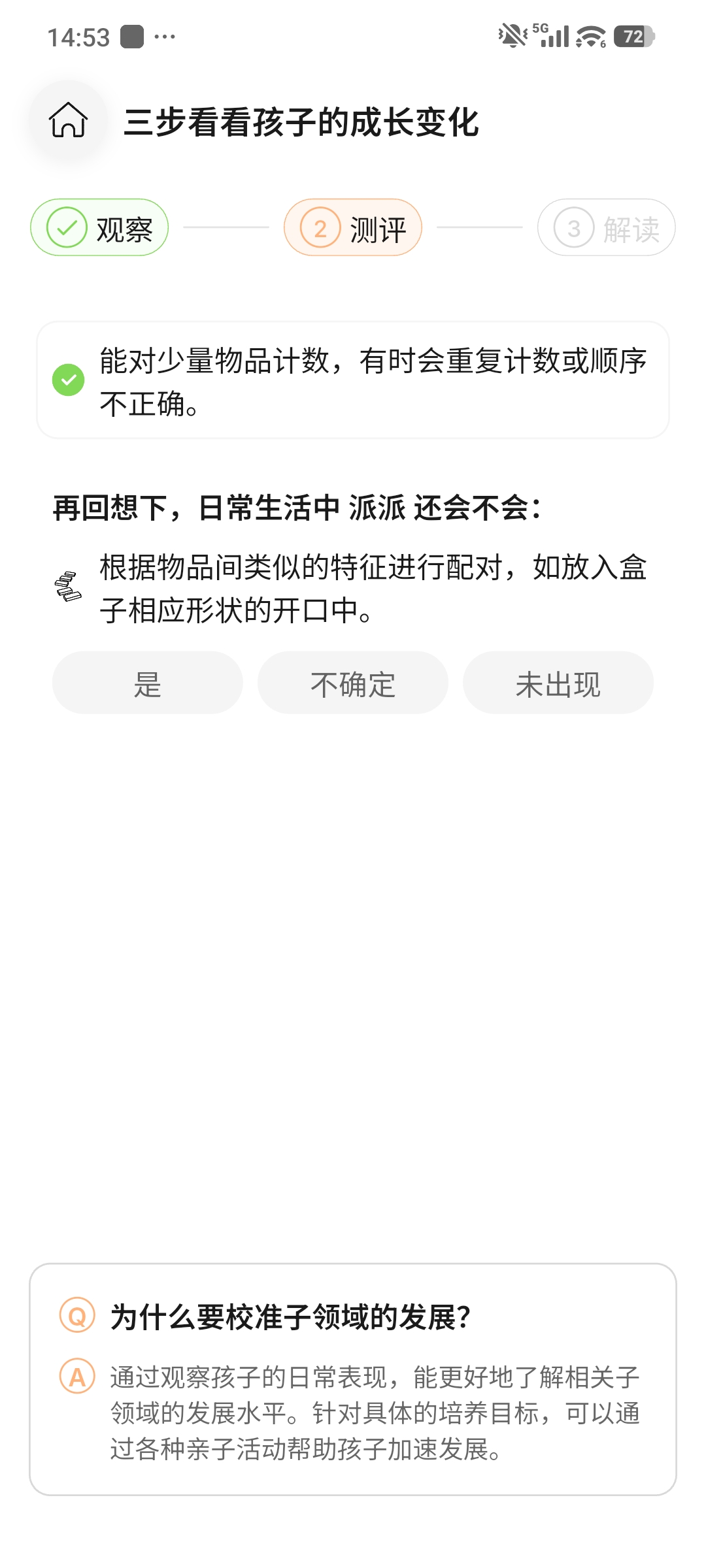
- Start with relaxed play: Choose an age-appropriate activity you can actually do, with clear guidance on how to begin, how to interact, and what to notice.
- Reflect on real behavior: After playing, use three simple steps to consider what happened this time and whether a related behavior also appears in everyday life.
- Make the next activity more relevant: Better Parenting uses the new observation to understand development more fully and connect it with a recommended next skill and activities.
Start with something you can do today
A useful activity does not need a table full of special materials, and it does not need to feel like a lesson with one correct answer. Games, stories, movement, toys, and everyday routines can all become starting points for interaction.
Every Better Parenting activity explains:
- the suggested age and what you need;
- how to begin and how to continue from your child's response;
- when to observe, wait, respond, or offer a little help;
- the one behavior most worth noticing this time;
- how the activity can support the related ability.
Suggested age helps you judge whether the play idea may be easy to begin. It is not a deadline for completing a task.
After playing, use three simple steps
Step 1 | Think about what you just saw
Start with one observation from the activity. Your child may take part fully, complete only part of it, find their own approach, or not show the behavior you expected. Each is real information. You do not need to teach the “right” response on the spot.
Step 2 | Consider whether it happens in daily life
One play session is affected by interest, materials, prompts, and how your child feels that day. Better Parenting also asks whether a related behavior appears in everyday life. This reduces the chance of drawing a strong conclusion from one success—or dismissing an ability after one difficult attempt.
Step 3 | See what this moment helped you understand
After the reflection, you can see what was confirmed, where your child may be along the related Growth Path, and what may be worth noticing or supporting next. When the new information is not enough to change the current result, Better Parenting does not manufacture a sense of “leveling up.”
A real example: First Belly Crawl
A 9-month-old may clearly want to reach a target without having developed a consistent way to move forward. First Belly Crawl does not ask you to arrange your child in a textbook crawling position. It begins with what your child already does—looking, reaching, kicking, turning, or pushing—and places a meaningful target close enough to invite an attempt, with a little help only if needed.
The key observation is not whether the posture looks perfect. Notice whether your child actively adjusts their body or tries a movement to get closer. Even without reaching the destination, a new push, change of direction, or continued attempt is progress worth seeing.
Read the full guide to active movement at 9 months
Why can the next activity be more relevant?
Better Parenting does not recommend only “more of what you just played.” Your reflection on the activity and everyday behavior helps update the relevant sub-domain. A recommended next skill and related activities can then focus on a useful next step.
Play–Assess–Play is not homework after every play session. It is a way for time together to help you understand your child more clearly:
Play together
→ Briefly reflect on real behavior
→ Understand where development is now
→ Choose an activity suited to the next step
You can also play without recording anything. Open the app only when you want what you noticed to contribute to your child's personal development results.
It is okay if there was no “breakthrough”
The value of an activity is not limited to completing an outcome. You can also notice:
- what caught your child's attention;
- whether they were willing to begin;
- whether they tried a different approach when something was difficult;
- whether they responded to you with a sound, expression, or movement;
- whether they needed a little less help than before.
If your child is uninterested, tired, or not ready for the difficulty, try another time, change the materials, make it easier, or move on to something else. An activity is not a course that must be practiced until it is “passed.”
Common questions
Do I have to reflect after every activity?
No. You can browse and use website activities on their own. Open the app when you want the observation to contribute to your child's development results and guide more personalized activities.
What if my child does not follow the steps?
First notice what they are doing and what they may be trying to accomplish. The steps help a family create a useful setting; they are not the only correct way to play. Within safe boundaries, your child's own approach may reveal something important.
Does doing something once mean my child has mastered it?
Not necessarily. A single performance can depend on prompts, materials, and interest, which is why Better Parenting also asks whether the behavior appears in everyday life.
Can one activity create immediate progress?
An activity can create opportunities to try, practice, and observe, but it does not promise a developmental leap after one session. Progress worth celebrating may be an initiation, a new approach, or one step taken with a little more independence.
Start with one real activity
- Browse on the website: See the materials, steps, interaction guidance, observation, and developmental benefit.
- Add it to your child's results: Download Better Parenting to reflect on what happened and see a recommended next step.