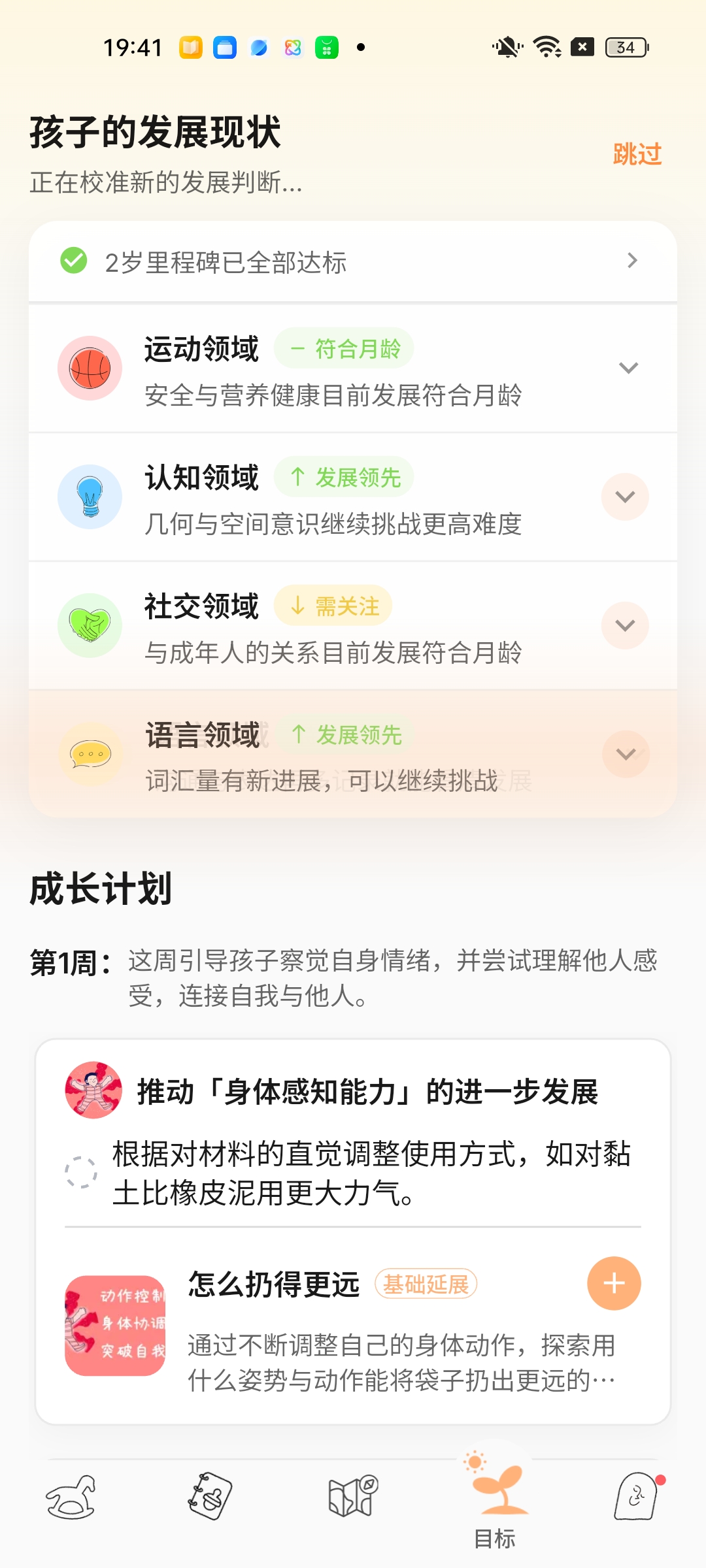
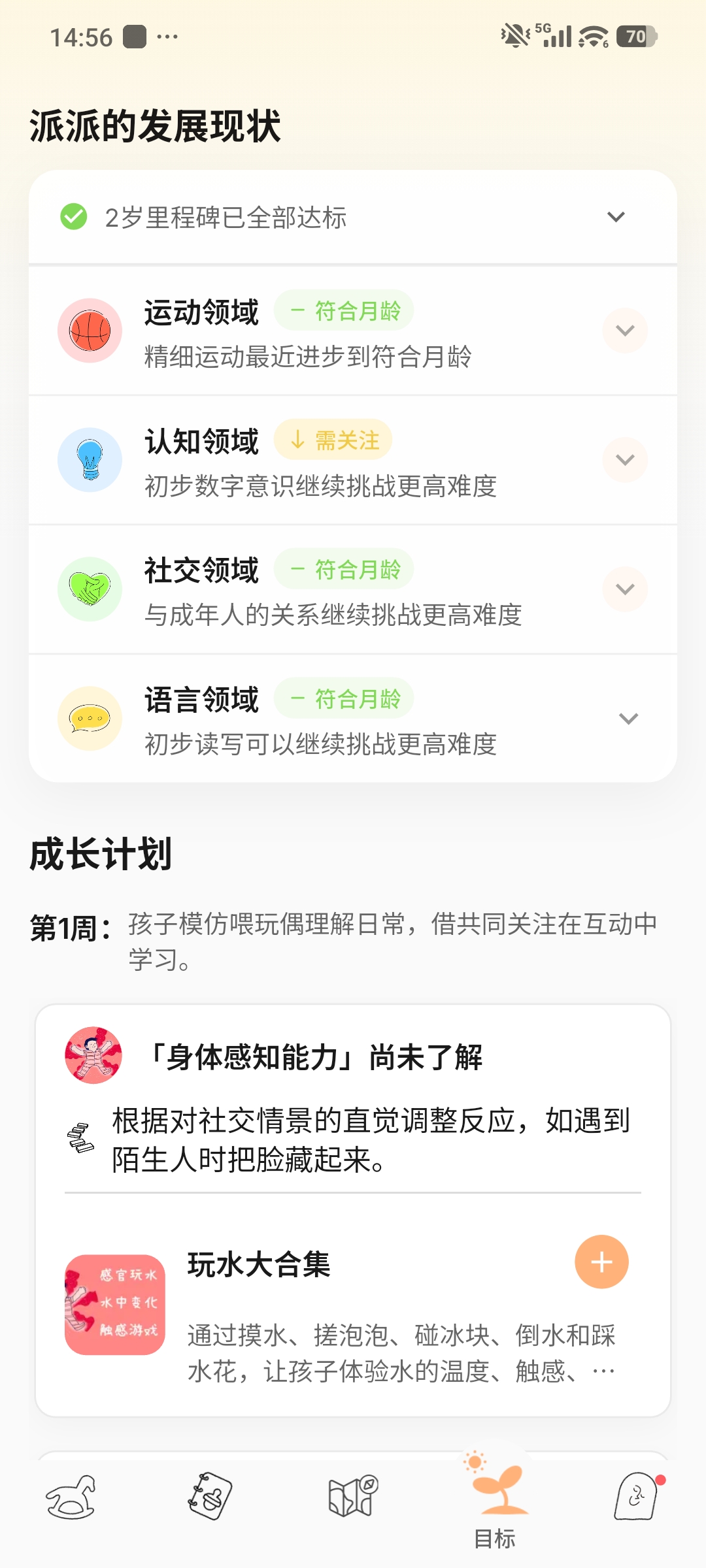
- Look beyond one noticeable behavior: Walking, talking, or one skill that has not appeared yet cannot represent your whole child.
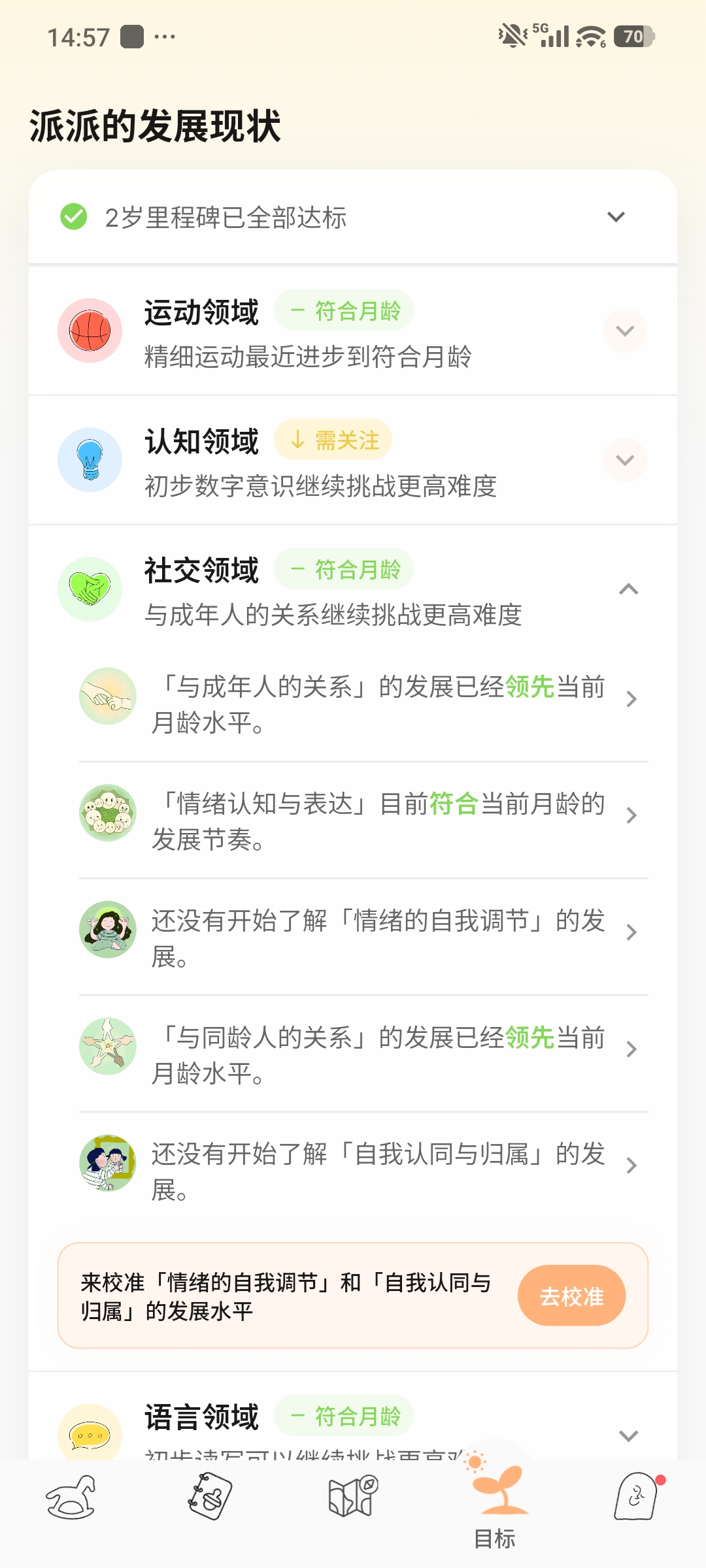
- See a map, not one total score: Start with four domains, then open a sub-domain to see its current status and the observations behind it.
- Know what you can do next: Add another observation, choose one ability to support, or let the Growth Plan organize near-term priorities.
Why “Can they do it?” does not tell the whole story
Child development has many dimensions. A child may walk early while still building vocabulary. Another may use few words but understand directions, solve problems, or connect with familiar people in remarkably capable ways.
When attention stays on one or two highly visible behaviors, a worry can become larger than the evidence—or a real strength can go unnoticed. Better Parenting's four domains and 31 sub-domains help families see more of the picture, without expecting a child to be ahead in all 31 areas.
Explore what matters across development from birth to age 5
Where the development overview comes from
Better Parenting does not judge your child through the camera or create a conclusion from a one-time animated scan. The overview grows from information you provide in three everyday contexts:
- after an activity, you briefly reflect on what happened during play and whether a related behavior also appears in daily life;
- you check age-based milestones using what you have already observed;
- when you want to understand one ability more deeply, you complete a Skill Assessment.
This information helps Better Parenting keep its understanding of each relevant sub-domain up to date. The latest results from multiple sub-domains then form the overview across Movement, Cognitive, Social/Emotional, and Language development. As you notice more, the picture can continue to change.
How to read the four domains
Movement
This includes more than rolling, crawling, and walking. It also looks at hand use, body awareness, and how your child uses their body to take part in everyday life.
Cognitive
This looks at how your child pays attention, explores, remembers, imitates, solves problems, and adjusts an approach, along with growing mathematical and scientific experience.
Social/Emotional
This looks at how your child understands and regulates emotions, builds relationships with adults, develops a sense of self, and gradually joins interactions with peers.
Language
This looks at how your child understands, communicates intentions, builds vocabulary, makes meaning from stories, and gradually becomes aware of sounds and written language.
The four domains help you see the overall picture. When you are ready to act, you can open a specific sub-domain to understand the evidence and the next step.
What the status labels in the app mean
Building foundations
The developmental level currently supported by the observations in this sub-domain is below your child's current age. This does not mean your child is “behind” overall, and it is not a medical diagnosis. Open the sub-domain to see whether the information is sufficient, what else to notice, and what you can do next.
On track
The developmental level currently supported by the observations in this sub-domain is aligned with your child's current age. You can feel reassured about these foundations while continuing to notice interests and strengths in other areas.
Ahead for age
The developmental level currently supported by the observations in this sub-domain is ahead of your child's current age. This is not a statement about intelligence, talent, or future achievement, and it does not create a need to accelerate. Follow your child's interest and offer appropriate new opportunities.
Developing is not a fourth high-or-low status
Developing means the sub-domain has been assessed and placed at a specific stage, instead of remaining Not yet assessed. It does not say whether the child's current developmental level is below, aligned with, or ahead of their age.
See where support may help—and where your child shines
The purpose of the overview is not to create a more complete list of worries. You can open an area that needs more support to review the evidence and next step. You can also notice interests, strategies, and strengths that are already emerging, then give them more natural opportunities to appear.
There is no point at which a child is expected to have every one of the 31 sub-domains on track or ahead. The four domains are a map that helps parents remember important parts of development, not a report card that must be fully lit up.
What can you do after seeing the overview?
- To understand one ability in greater depth, explore personalized skill development.
- To reduce the work of choosing, open the personalized Growth Plan.
- To understand how abilities generally develop, browse the 31 sub-domain Growth Paths.
- To see how the system reaches these results, learn how Better Parenting works.
Common questions
Do I have to complete every assessment before I can see the overview?
No. Start with the area that matters most to you. The picture forms and updates as more observations are added. A sub-domain with insufficient information should say so clearly instead of pretending that a complete conclusion is available.
Does Building foundations mean my child is behind?
It means that the developmental level currently supported by the observations in this particular sub-domain is below your child's current age. It does not mean your child is behind overall, and it is not a diagnosis. Review the specific evidence, whether enough information is available, and the suggested next step.
Should I keep developing an area that is Ahead for age?
You can continue offering interesting, appropriately challenging opportunities, but there is no need to push for faster progress. Being ahead is not a score your child must maintain.
How often does the development overview update?
The results can update through the app's current process when relevant new information is added. The website does not promise an update speed that the product does not provide.
Explore the four domains before viewing your child's results
- Browse on the website: Explore Movement, Cognitive, Social/Emotional, Language, and the 31 sub-domains.
- See your child's personal overview: Download Better Parenting to view their current results.